


The Mysterious Ljubljanica River
After searching, but not finding, the silver prince in the center of Ljubljana, the desire to fish for a species so characteristic of this karst river kept growing. One evening, I suddenly gave in to a spontaneous idea to turn the following day, free of obligations, to my own advantage and catch the last breath of summer.
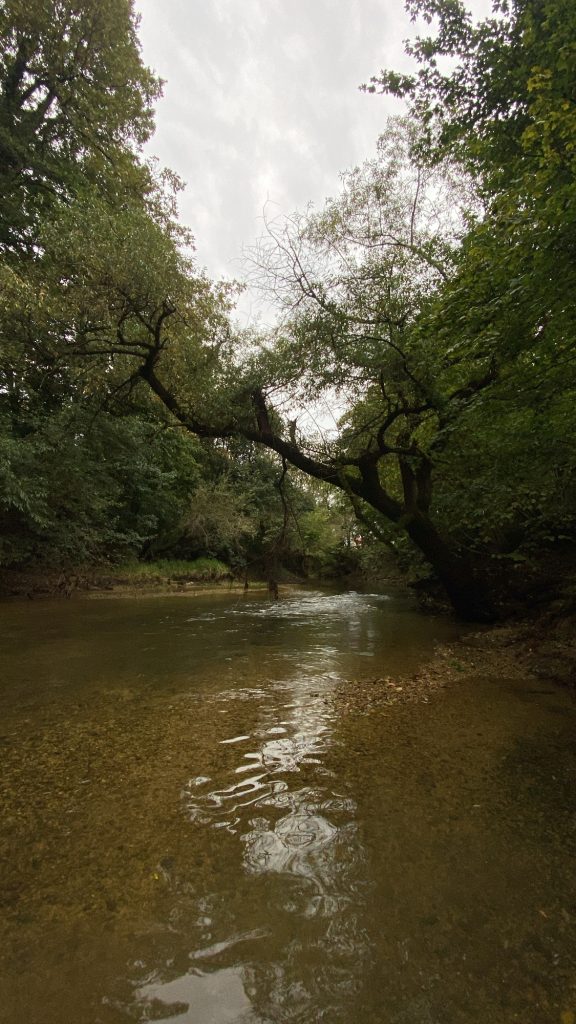
The river of seven names, with its historical and cultural role, is without a doubt one of the most recognizable and important Slovenian rivers. Because of its green shades and riverbanks, it best represents, for many, the homeland whose main color is, due to countless forests, meadows, and overgrown cities, in my opinion, precisely green. Wide, slow and deep bends, along with occasional shallow and fast rapids, make it attractive to all kinds of anglers, as it effortlessly satisfies their desires and provides a habitat for the largest predators. In my early youth, I also honed my fly-fishing skills in the upper reaches of its mysterious flows, where despite beginner mistakes I always managed to catch a nice fish. I have not fished the upper section for several years, but based on good memories, I knew exactly where I would find plenty of native Danubian grayling and thus justify their reputation in this river.
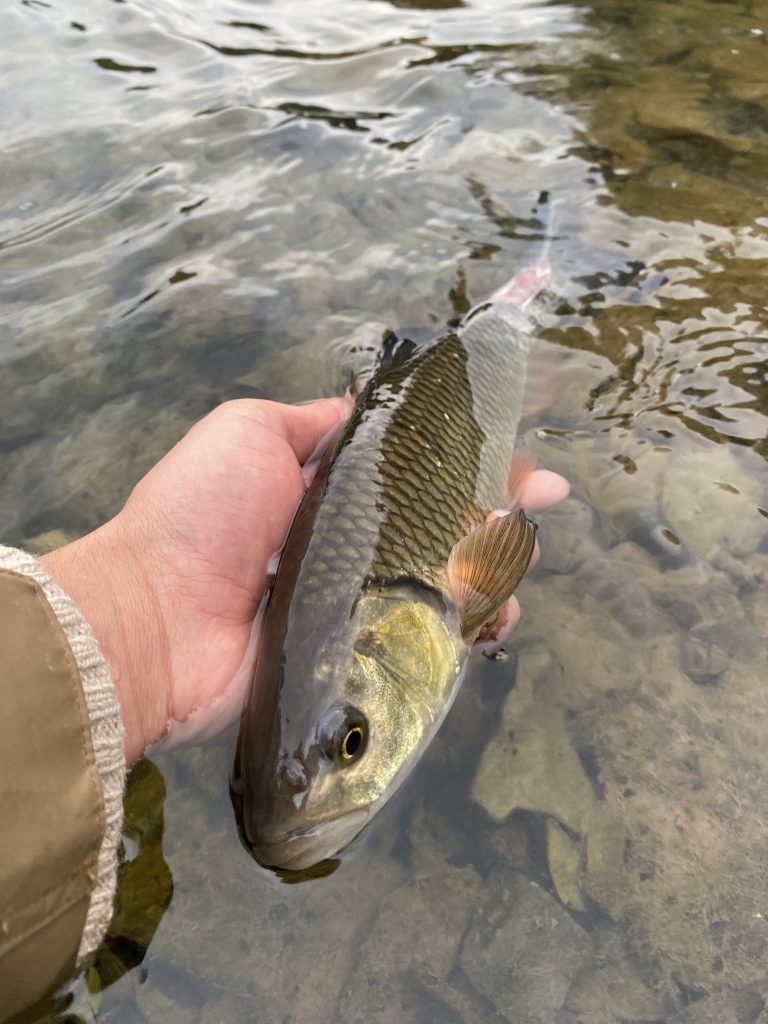
Luckily for me, the equinox had just passed and the length of the day had begun to shorten, which, despite a later start to fishing, meant more sleep. At the start of the day, the lack of light was further enhanced by thick grey clouds, which, together with high pressure, created perfect fishing conditions. This assumption was confirmed already on the third cast, when after the strike, a yellow fish flank flashed at the other end of the thin line. In the same second, however, the tension was lost due to either an improper strike or bad luck. To shake off the morning confusion and prepare for the next opportunity, I took a few deep breaths of the cold morning air, stepped forward, and continued. The concentration clearly helped and I landed my first fish. The unfortunate chub, besides being small, was also injured, so I immediately released it and, thinking about the origin of the wound, imagined large predators. Although the nature of the wound did not make it obvious, I was most tempted by the idea that the chub had been attacked by a huchen, for which the Ljubljanica is also very well known. Even more, what if the wound had been caused by a larger brown trout, and what would it be like to catch such a trout?
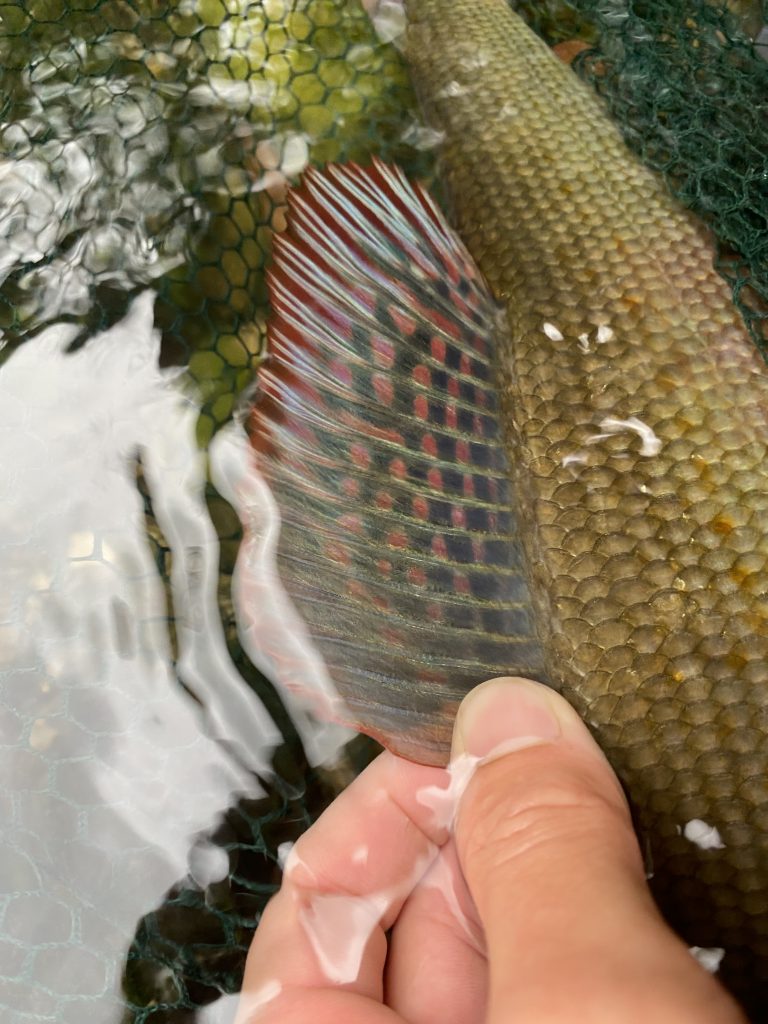
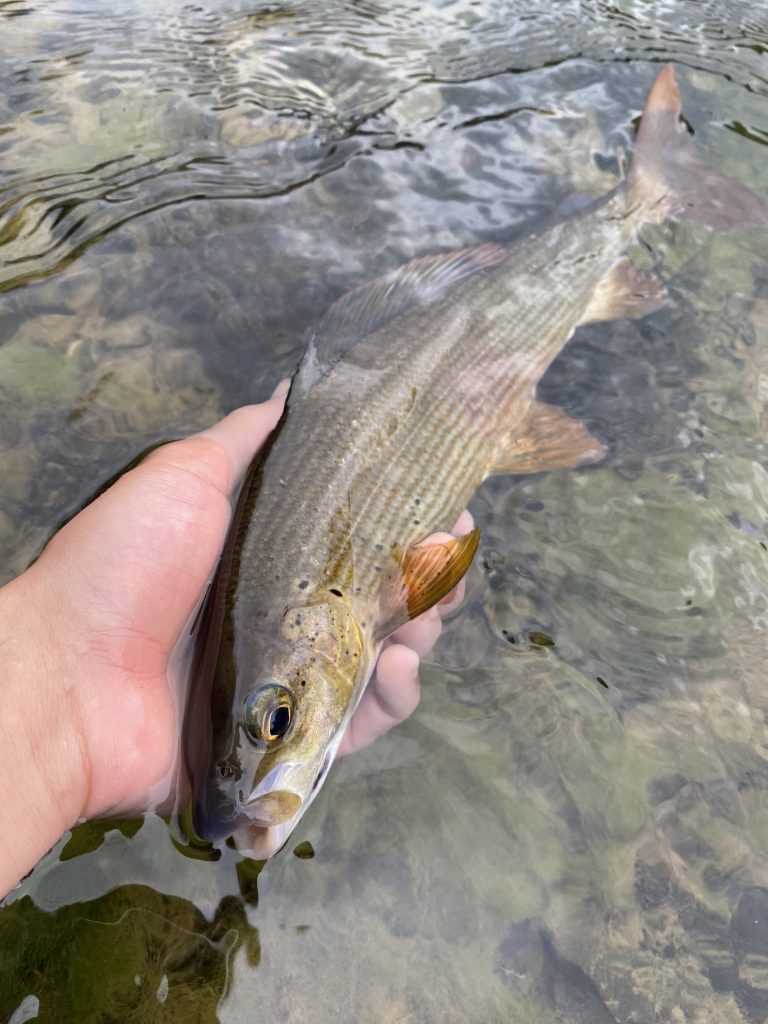
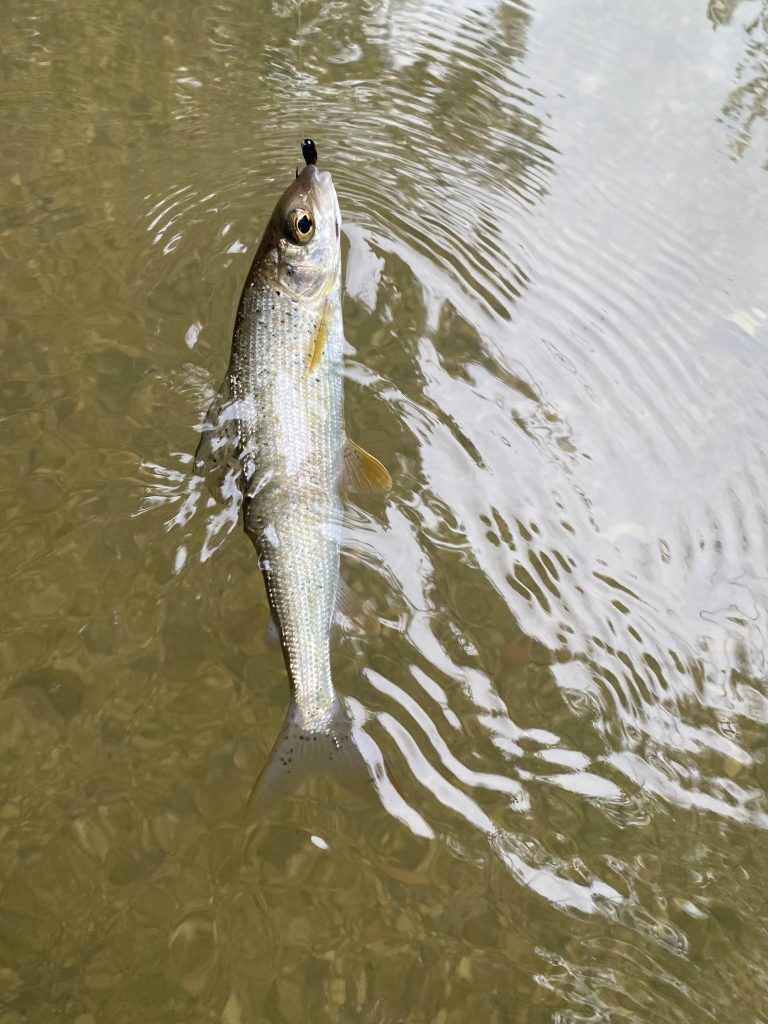
Surprisingly soon I covered a large portion of the water planned for the morning, but only caught a large number of chub. Their specific smell was almost making me sick when I paused for a moment and changed the fly, determined not to leave the pool until I caught at least one grayling. Although the water was slightly turbid, the light poor, and the bottom completely dark, if not almost black, so that no fish could be seen, I was convinced that grayling were present. I therefore used a juicy caddis larva imitation that no wild fish should resist. I deliberately cast to the same spot as many times before, to test the selectivity of the fish. The choice paid off immediately, as I got a take right away and soon successfully landed a beautiful grayling. I knelt in the water, wetted my hands, and gently removed the hook. The pointed head, golden body with large scales, and perfect fins testified to the paradise-like life of this animal, which, with its perfect camouflage of a dark back, had clearly never experienced significant stress. To catch a glimpse of one of the rarest colors in fauna, I slowly spread the dorsal fin and saw shades of blue. With a smile on my face, I released the silver prince, which then turned and instead of swimming into the current, moved into a side channel, where I managed to take one more photo before it realized its mistake and disappeared back into the deep dark-green pool.
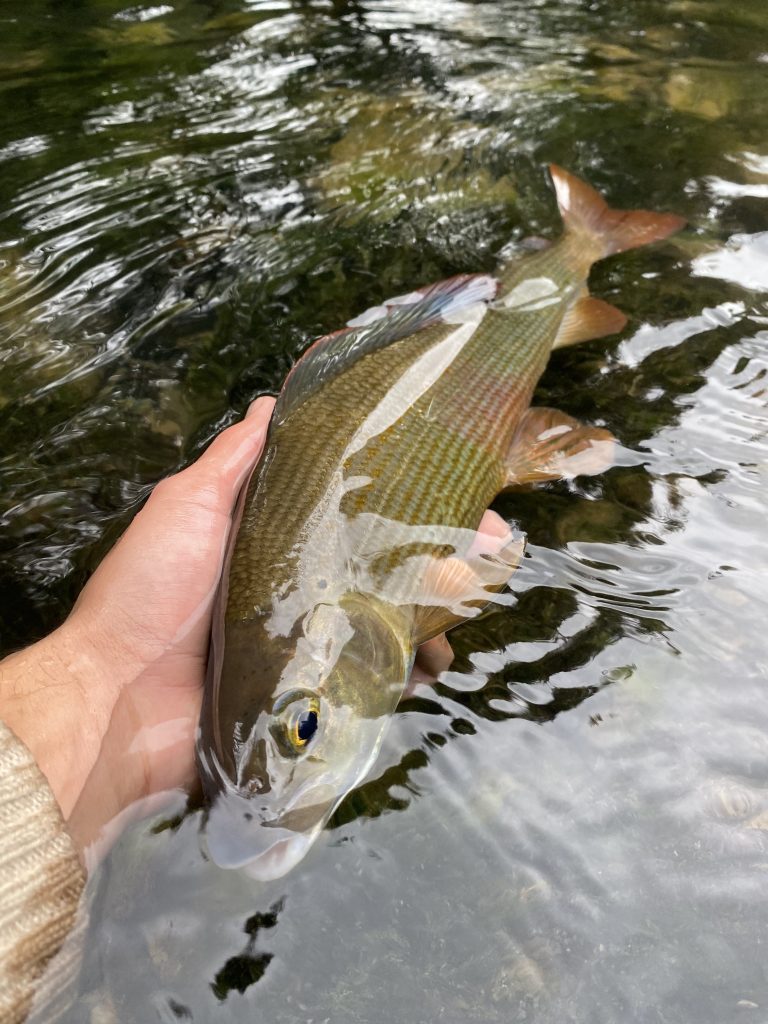
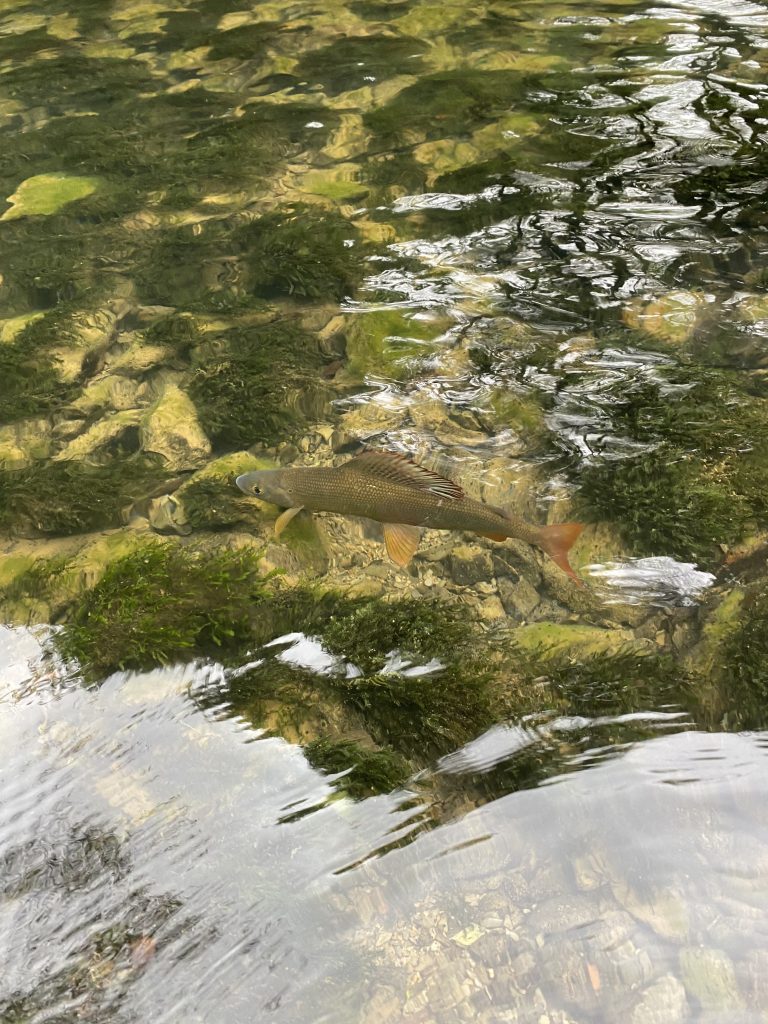
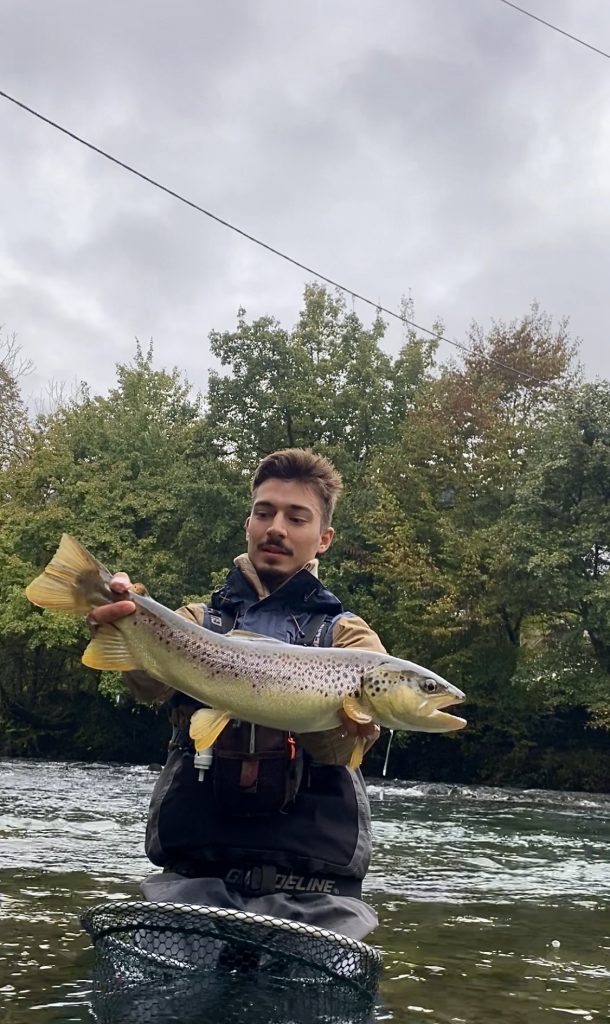
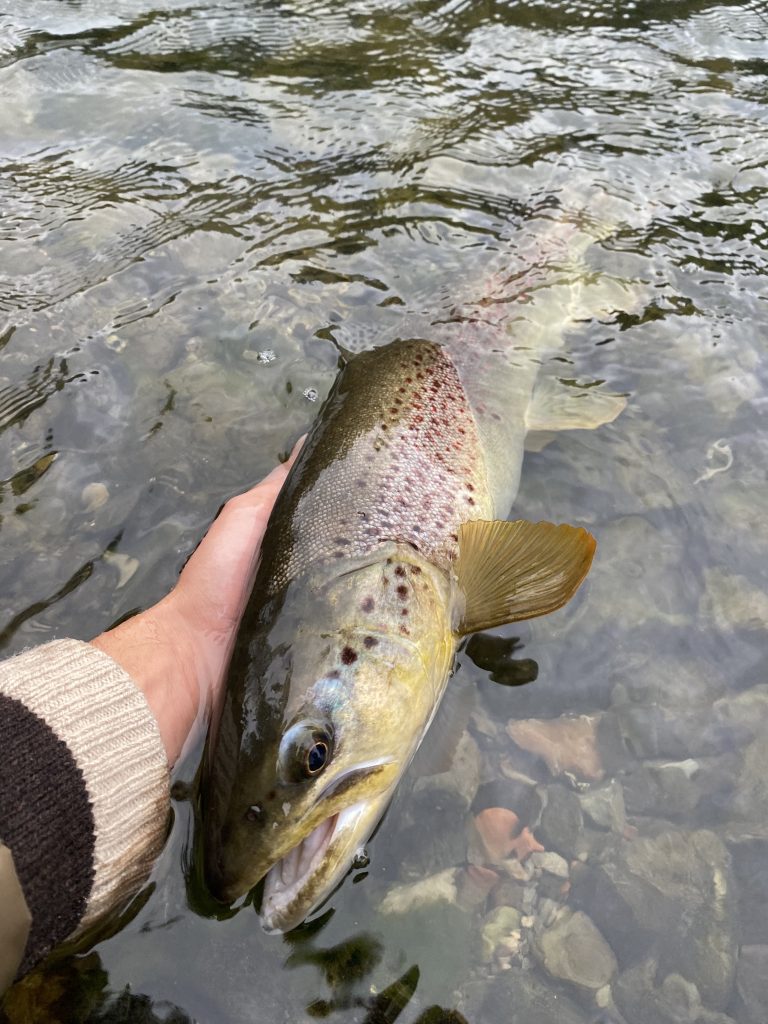
I noticed that despite being close to the source, the river was also inexplicably full of human waste in this section. Individual spring branches, even before merging into the Ljubljanica, are surrounded by houses and even some industrial facilities, which is why various large and micro waste can be found in it. Although biological waste and chemicals are far more problematic, the fish population seemed surprisingly good. I caught many grayling, which performed spectacular fights with jumps even up to a meter out of the water, and in one of the better pools my thoughts again turned to brown trout. I remembered my first, albeit very small, brown trout that I caught in this exact stretch. I persistently fished the pool, caught a few smaller fish, and was almost ready to move on when, after a delayed strike, I was surprised by an unusual response. The hooked mass moved slightly but without jerking, so I increased the tension. The fish woke up and pulled strongly deeper. Flooded with adrenaline, my glucose levels immediately rose, and with a rapid heartbeat I quickly removed excess line, followed the fish, and reacted calmly. What on earth is this? I wondered about a possible accidentally hooked huchen, and then for the first time saw a shade of yellow. At first, I could not believe my eyes. The fish soon showed itself again and removed all doubt. Shortly after, a remarkably large brown trout found itself in my net, and my heart skipped a beat. This wild fish, with its perfect fins and slender body, was undoubtedly one of the hidden gems of the Ljubljanica. Despite its size and the beginning of autumn, I did not want to stress it unnecessarily, so I discreetly and quickly lifted it from the water for a memory photo. Wild and healthy as ever, its dark back blended perfectly with the riverbed, while the blue cheeks on its large head shone like the finest ornament. I held it in the current for a few seconds before it suddenly darted back to its secret and almost invisible place. Satisfied, I headed back to the car, catching a few more grayling along the way, and then warmed my hands with hot tea, as they were freezing due to the cold wind and constant wetness.
After an unexpectedly long rest, I set out for the evening session late and in a hurry. Although I had already fulfilled all expectations, I could not resist exploring a previously unknown section. Due to lower water levels and a sandy-gravel bottom, the fish were slightly more visible here. Slowly wading through the middle of a heavily overgrown channel filled with fallen trees, I moved from pool to pool. Although I only saw smaller fish, I decided not to skip them but to play with them a bit. I carefully observed their behavior before and during takes, while also sharpening my sense for subtle strikes. Smaller fish are of course easy to catch, so I quickly grew tired of playing with juvenile grayling and focused only on deeper areas. While fishing one of the pools, I briefly noticed a larger grayling. I tried different flies, but despite excellent presentations, even seeing the nymph touch the fish, it did not react. Because of its size, close to half a meter, I wanted to try a few more patterns, but after changing flies I could no longer spot it. I stood on my toes and stretched to see it again, but in vain. I continued casting and, as most of the day, reached the bottom almost every cast, constantly hooking algae, vegetation, and bushes behind me. During a routine strike, I suddenly felt an incredible weight. Unfortunately, it was not a grayling. After a difficult effort to retrieve the fly, I pulled a schoolbag out of the water. I imagined the joy of a kid who, on the last day of school, threw everything into the river, laughed, and, thinking of the fish I had caught, I too smiled and moved on to make use of the last minutes before dusk.
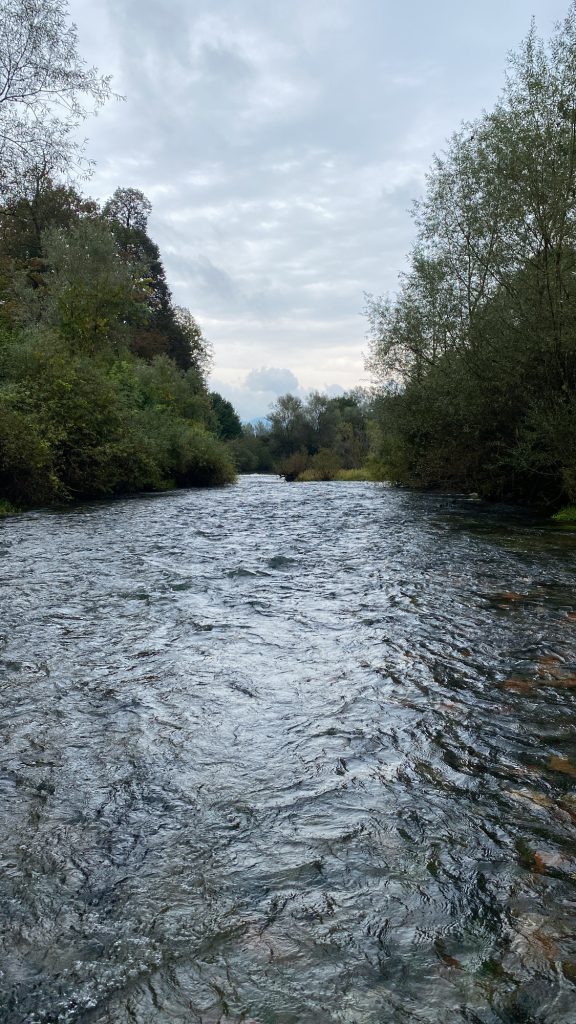
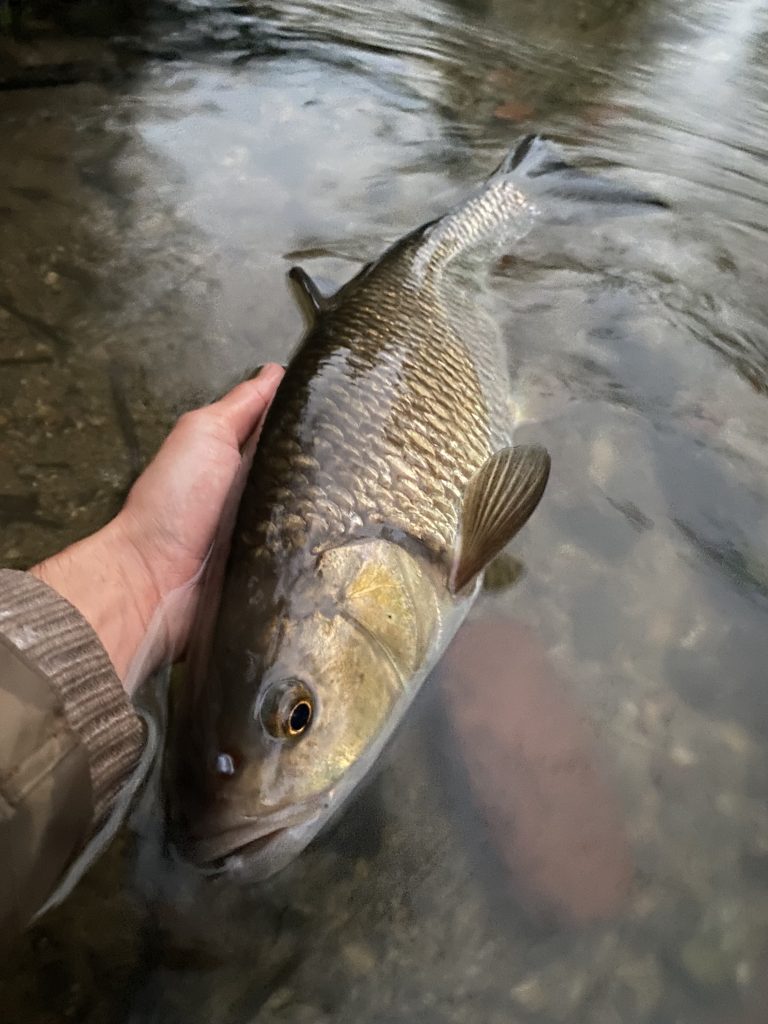
I caught a few more average grayling and, on the final casts, a huge chub. Besides being near the maximum size for its species, it was also unbelievably thick. There was barely enough daylight left to cross the river one last time on my way home. I walked across the bridge and took one last look at the dark mass of slowly swirling water. I was overwhelmed by the feelings of the day. A large number of grayling, one of the bigger brown trout, not a single stocked fish, exceptional banks… A day spent in one of the most promising fishing areas undoubtedly turned into a unique and unforgettable experience.
Leave a Reply