


With my legs sunk into the mud up to my thighs, I leaned forward with the last of my strength into the dark depths and scooped my catch into the net. To the sound of my own heavy breathing and birdsong in the background, I stared into the net and saw as hazelnuts big, red spots scattered along the body of the fish.
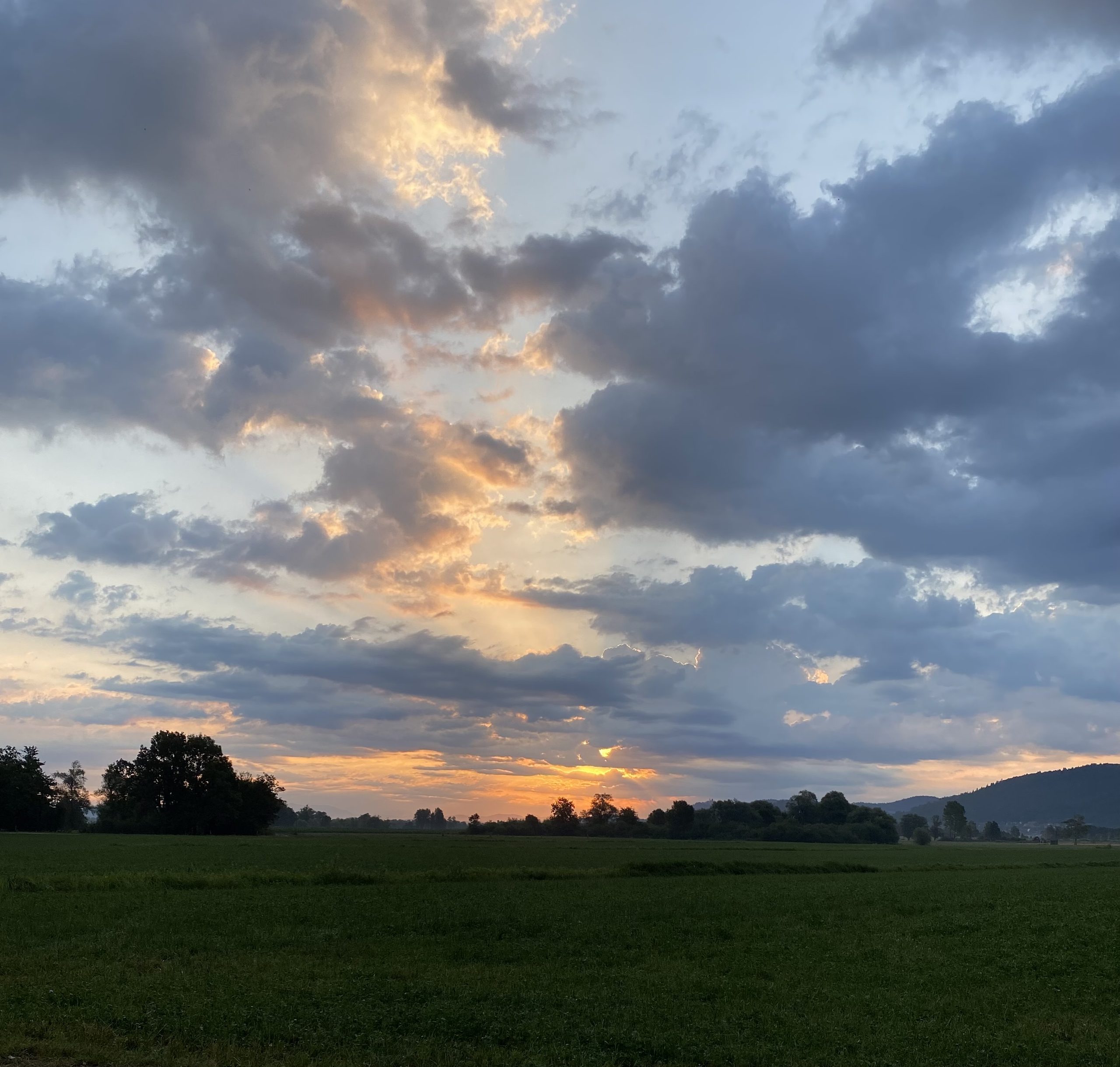
I remember my younger days, when, as beginners in fly fishing, a friend from a neighbouring village and I first visited the tributaries of the Ljubljanica. Although most flies ended up in bushes or branches of overhanging trees, every now and then we managed to fool a beautiful grayling. His elegant approach to the fly is still an unforgettable memory for me, and the Bistra has held a special place in my heart ever since. Full of enthusiasm, I returned to the river several times that summer. Since I was fishing in the difficult-to-access, overgrown banks at the wrong time of year, I did not catch a single fish, and my visits soon came to an end.
As my knowledge of different rivers grew, so did my fly fishing confidence. I began to wonder whether I might try fishing the Bistra again and make sure that the net did not remain dry. After years of postponing it, I finally found a free day to revive old memories. But it was not only about the memories. It was also an opportunity to learn. Could I read the river better than I once had? Could I approach it quietly and unnoticed? Could I choose the right fly and, after a take, play the fish without mistakes ?
The drive there promised a special atmosphere, which had cleared by the time I arrived, like the morning mist. At the most beautiful of the pools, I made my way towards the bridge, where the local road was deeply excavated and the connection between the two banks interrupted. Disappointed, I drove to another fishing spot, prepared my equipment, got dressed and headed towards the river, where another surprise awaited me. The confluence of the two branches of the river, which I remembered as an untouched and peaceful oasis, had been completely transformed. On the once overgrown banks there were no longer any trees, apparently knocked down by a storm and then cut up. One of the branches of the Bistra had been completely lost in the rapid growth of vegetation. Since nature recovers incredibly quickly, I was not concerned about the lack of vegetation, but I was nevertheless disappointed by the obvious change, because I remembered this spot quite differently. The Bistra had clearly changed a great deal. What about me?
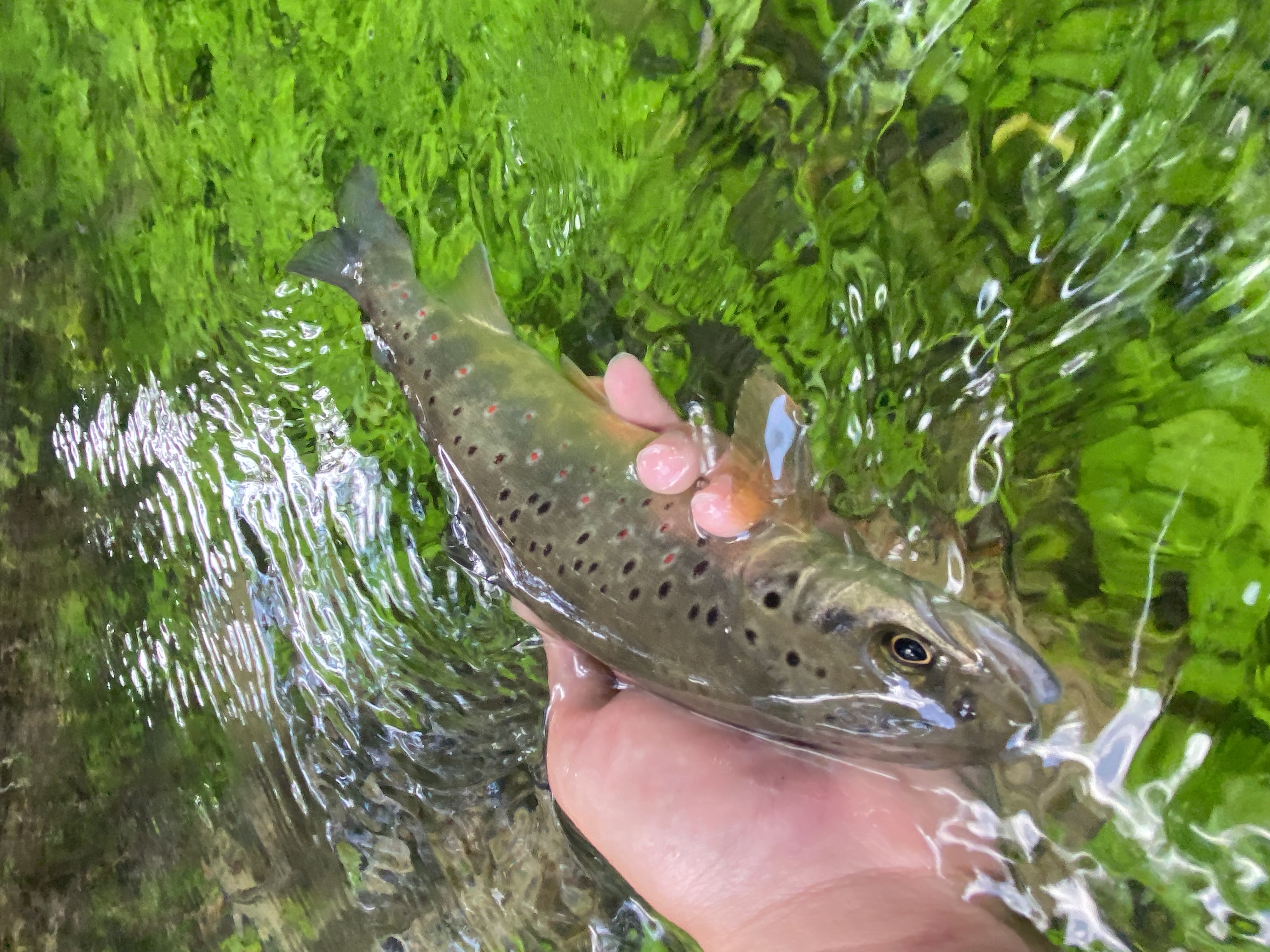
I decided to save the familiar spots for the end and crossed the stream towards one of the larger tributaries. After walking around a pool, I finally caught sight of a group of chub, so I could start fishing. I quickly became accustomed to the good conditions for sight fishing, as the fish responded to almost every cast. Soon I spotted a small grayling in the shallow water, but it eagerly grabbed an imitation of a juicy caddis larva. At the large number of caught grayling, I continued upstream and, at a smaller waterfall where the water was full of bubbles, enthusiastically began searching through the water. After a few casts, brown trout appeared. That was the catch I had not yet managed on the Bistra and was therefore one of my main goals. The fish was in excellent condition, with an exceptionally short dorsal fin that was heavily damaged, as is usually the case with stocked fish. I noticed a similar injury on a grayling as well, and since fish had never been stocked in that area, I concluded that the damage had most likely been caused by a predator. The fish proved incredibly resilient despite their injuries, almost as if they wanted to show why only the strongest survive natural selection.
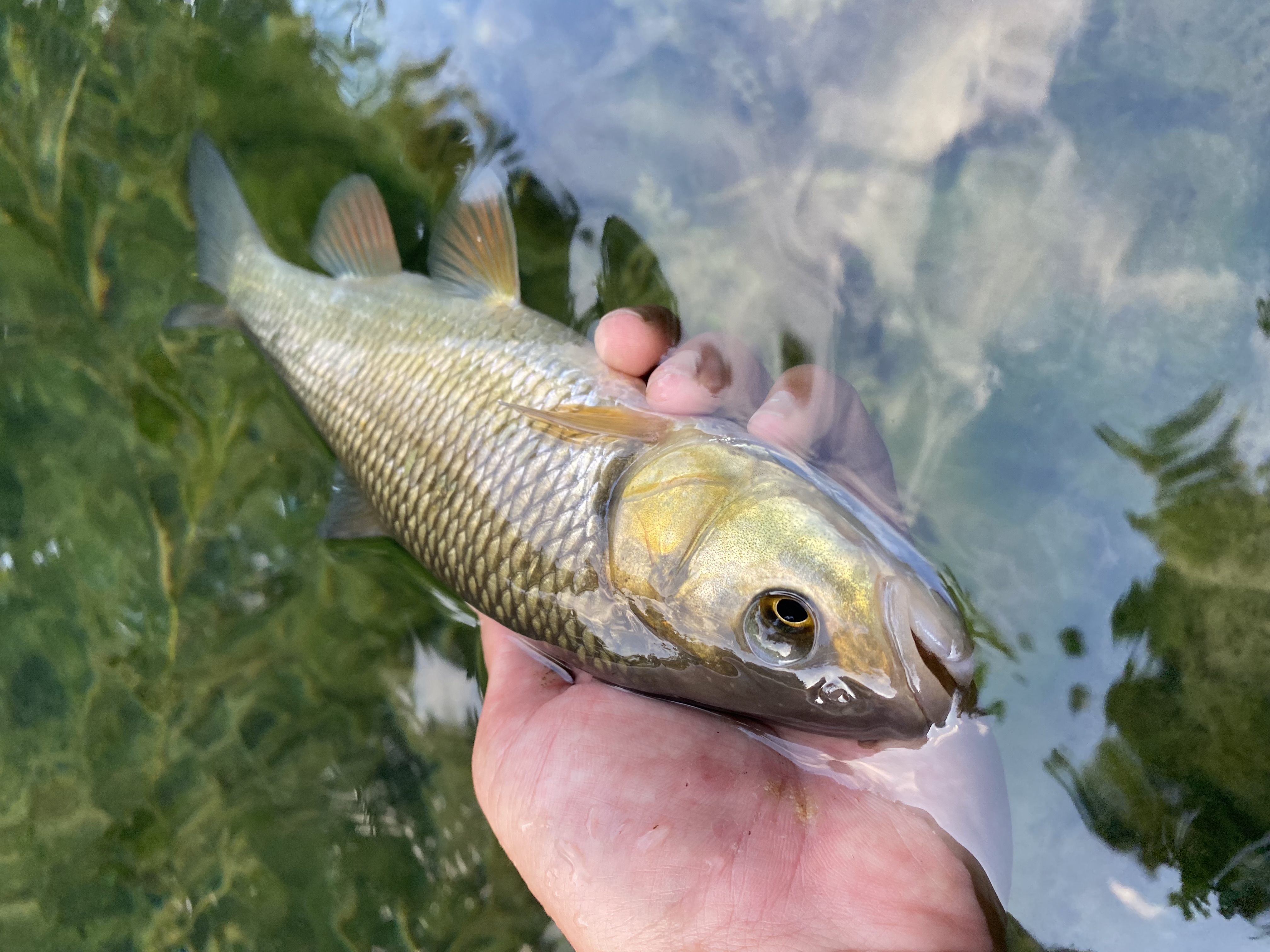
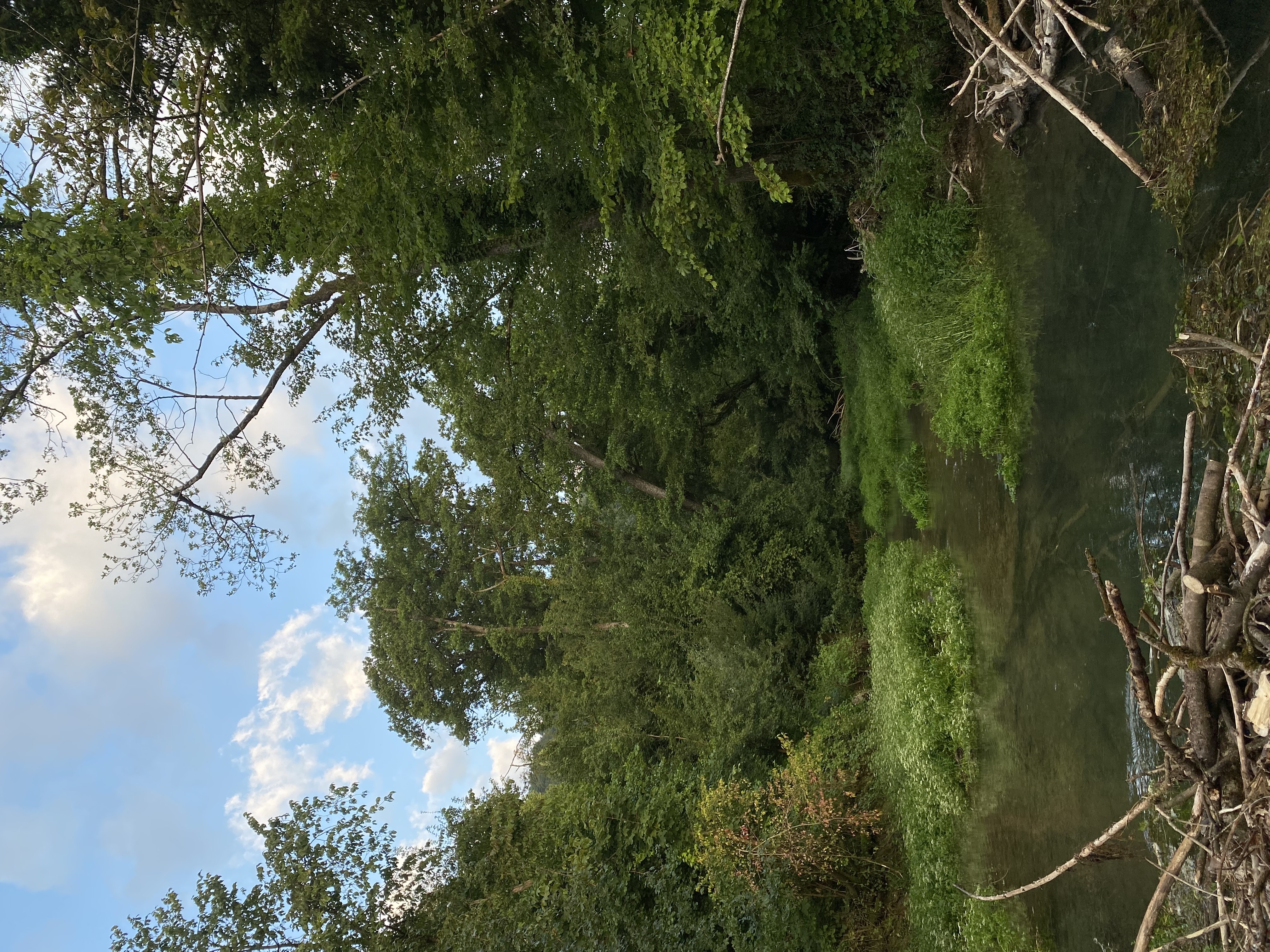
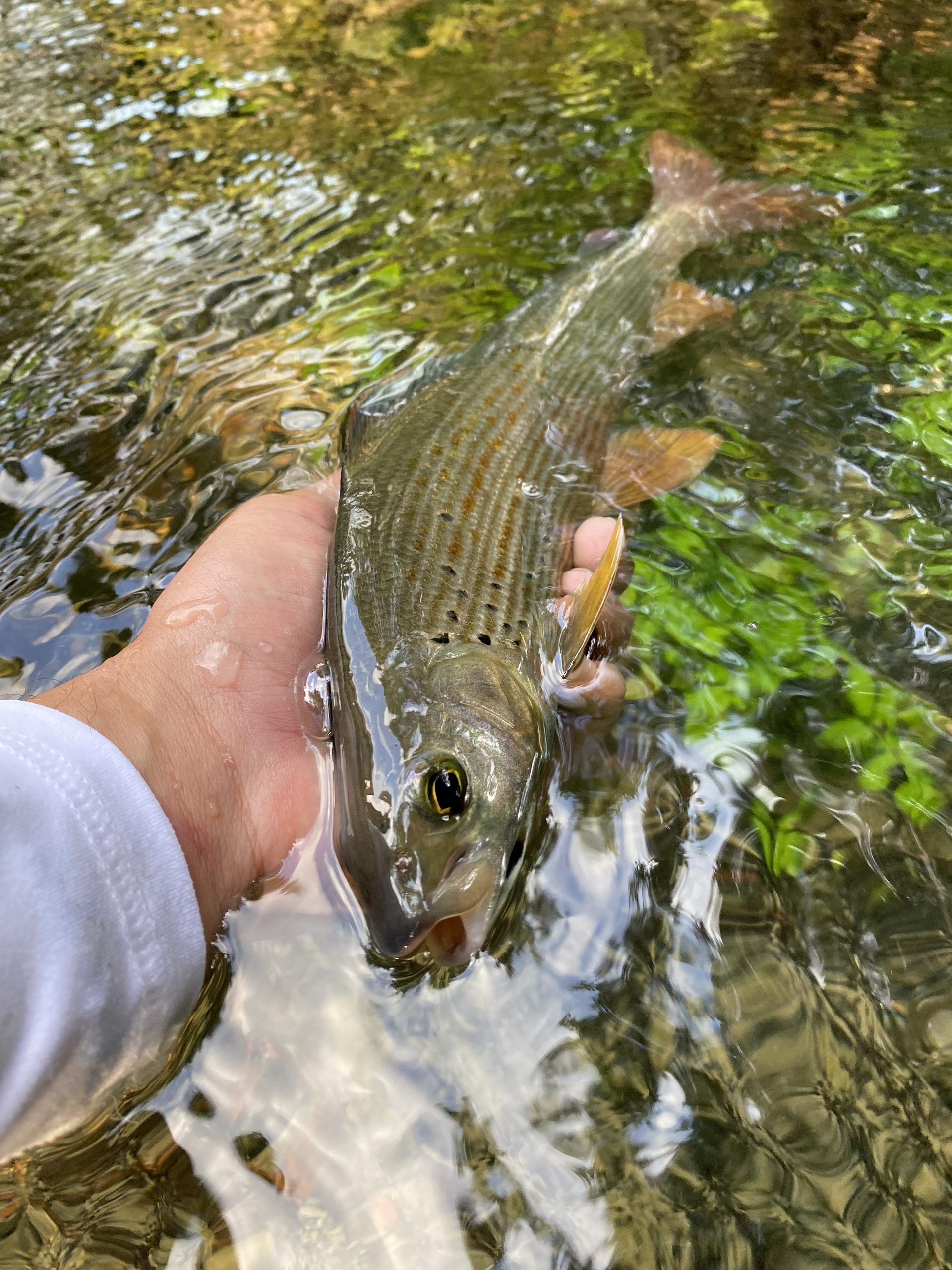
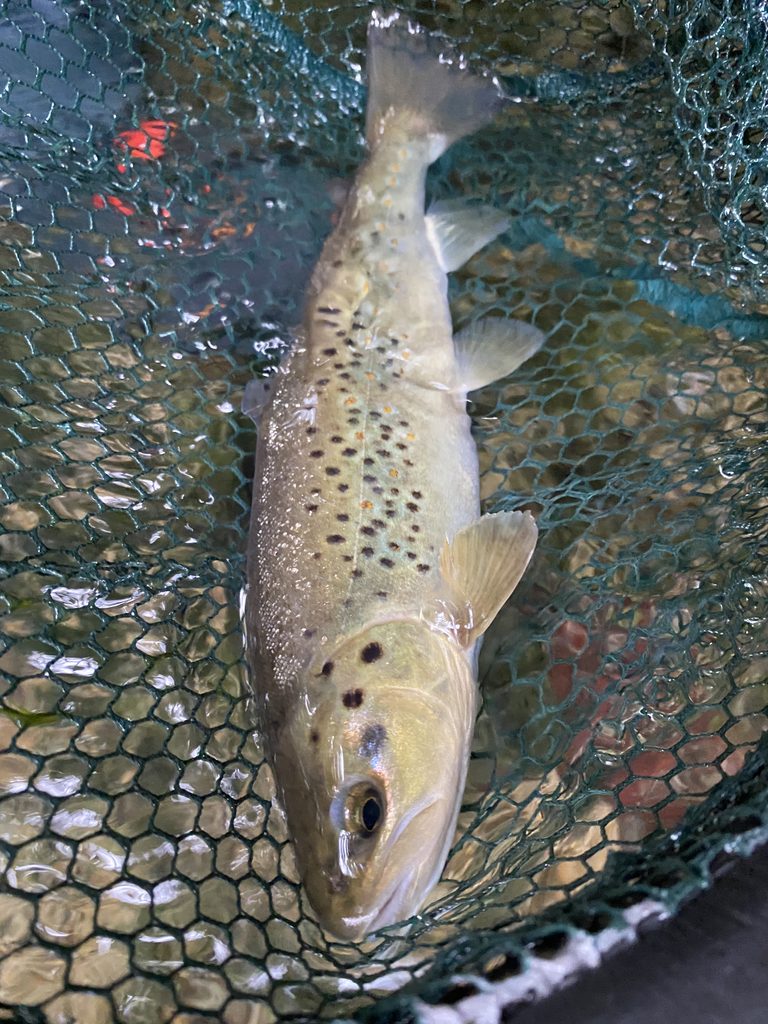
I caught a few more grayling and, convinced that I would not catch any more trout because of their scarcity, made a few final casts. A tug at the end of the line, a bend in the rod, and there was another brown trout in the net. It was even more beautiful than the first, as I could not find a single flaw on it. Strange, I thought, and crawled like a nutria onto a flat patch of grass through a gap in the overgrown bank. Only later did I realize that it had been a long time since I had experienced a day of fishing filled with such extreme surprises and contrasting emotions.
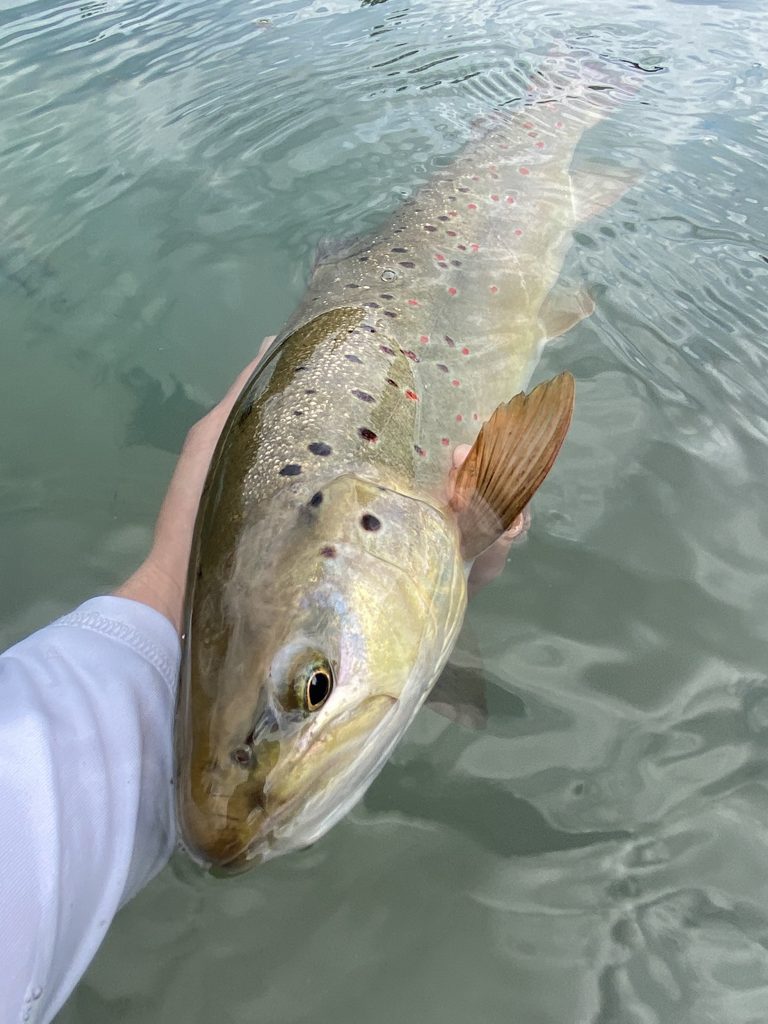
A slightly cool morning was already behind me as, on my way back, I walked past an enormous number of frogs and large grasshoppers. I felt calm and relaxed, but at the last morning fishing spot I froze like a stone. A sight every angler would wish to see was waiting for me. In a deep pool with long strands of floating aquatic plants, an enormous dark shadow appeared. I slowly took a few steps back, crouched down and focused my gaze. It blended perfectly with its surroundings and looked like an extension of the vegetation. It was very dark, so I was concerned that it might be a huchen. Since it seemed to have a small head and distinctly sharpened fins, however, I decided to try. Because huchen do not usually feed on small larvae, I first tried a small caddis larva tied on a size 22 hook.
This turned out to be an almost fatal mistake, as I had failed to notice the chubs hidden among the vegetation, which immediately darted after the larva. After a perfect presentation, I nervously released the tension on the line as the fly drifted past the large fish and the mouths of the hungry chub. Fortunately, none of them hooked themselves, and as soon as the fly had passed the fish, I quickly lifted it out of the water and considered my next choice. I selected a considerably larger imitation, presented it nicely and watched as the fish turned to one side, slowly and cautiously. Hop and I had it. Immediately after the strike, I saw its spotted body. My heart rate quickened and my legs trembled as I started to fight the trophy brown trout. During the tense but brief fight, the fish repeatedly disappeared beneath trees or thick vegetation, causing my heart to stop for a moment. With both the trout and myself rapidly running out of strength, I just managed to scoop it into the landing net. I let out a deep sigh and felt as light as if I were floating on air, even though I was buried deep in the mud. After a few quick photos and a brief moment of admiration, the fish calmly swam back to its spot and disappeared among the swaying vegetation.
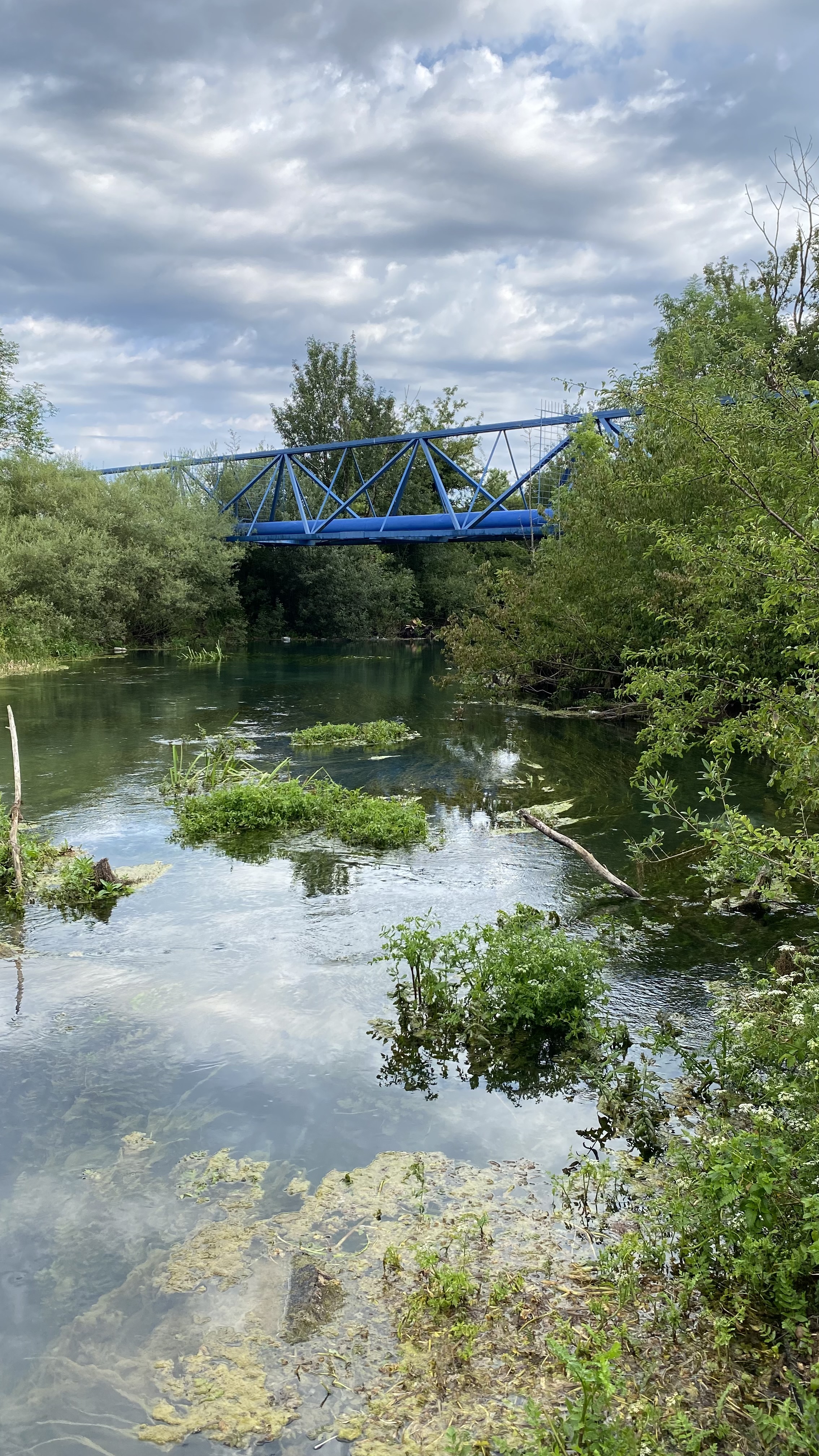
After the passage of a cold front, the air had cooled considerably in the evening, and mist began to appear above the river. In the evening twilight there was no sight or sound of insects, so for fishing in the first pool I tied on a nymph. As I drifted it through the dark, deep counter-current, I felt a slight pause and then a heavy pull. I pulled harder and, after a few moments of gradual shaking, a huchen appeared at the surface. Despite light equipment and the surprise that had caught me off guard, I brought it into the net in less than a minute. I quickly removed the hook and held it in the current for a few more seconds until it recovered and powerfully swam back into the depths. Meanwhile, I dipped my fishing rod into the water and marked the spot where its length reached. Later I measured it, and it was more than one metre long.
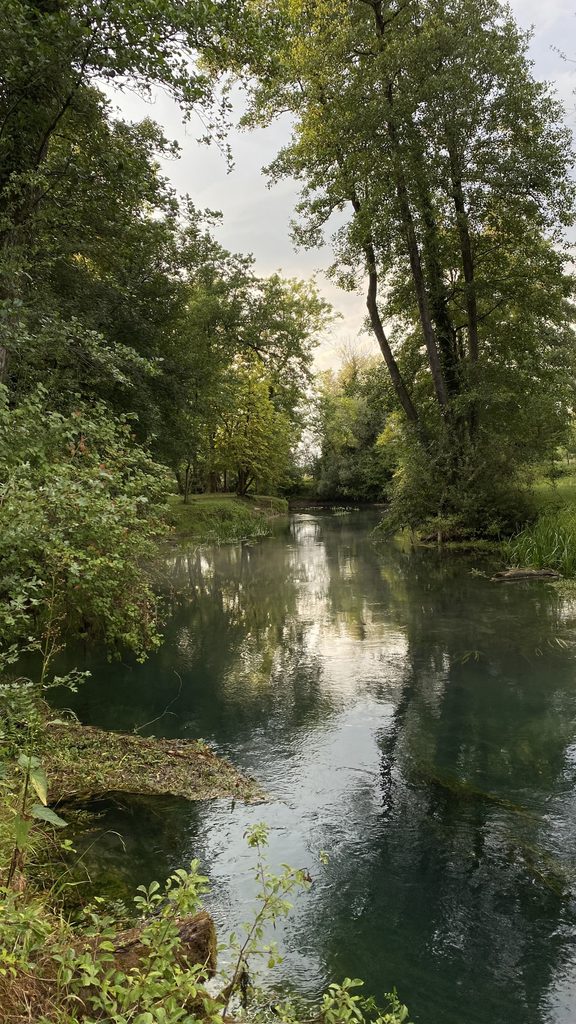
Tired of nymphing, I spent the rest of the day fishing exclusively with a dry fly. Even smaller fish noticed the fly from a distance and rose to it. With the intention of reliving old memories, I found myself exactly at the place where I had caught my first grayling. Although the spot was the same as it had once been, I could feel the traces of time. I wondered how much I had changed and why, and I was ready for a take at any moment. The dense tangle of bushes that had once made casting impossible was now easily overcome simply by adjusting the direction and height of my cast. In surroundings that had once completely overwhelmed me, I now felt in control and at ease. I caught a few grayling and, looking at the last and smallest one, found myself wondering: perhaps we’ll meet again in a few years’ time. In a changed river, as a changed person.
Leave a Reply